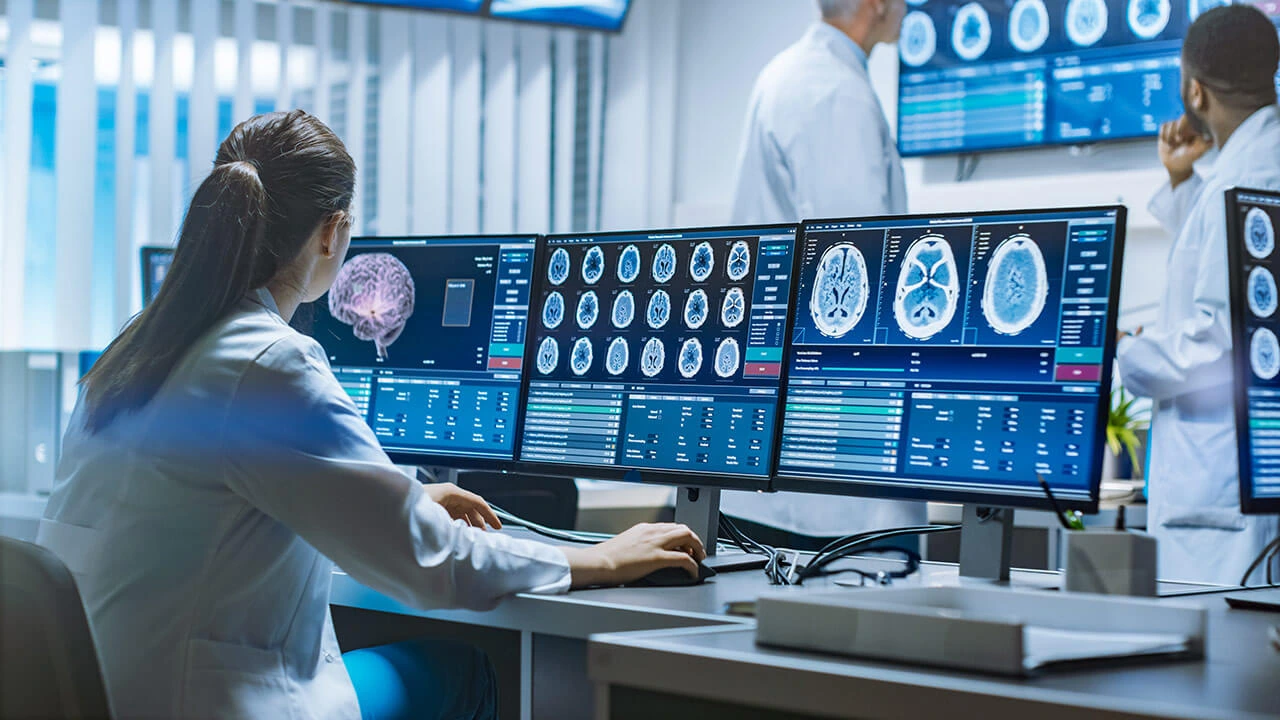
There is a quiet revolution happening in hospital wards across Nairobi, Lagos, Kampala, and Accra. It does not announce itself with press releases or glossy product launches. It shows up in a nurse receiving an alert on a tablet that a patient's sepsis risk has crossed a threshold. It shows up in a radiologist in a district hospital reviewing a chest X-ray flagged by a model trained on a million images. It shows up in a triage team that, for the first time, has something other than experience and gut instinct to help them decide who goes first.
I have spent years researching the adoption of machine learning systems within the health sector — including two systematic literature reviews published in peer-reviewed journals — and one thing is clear: the technology has matured faster than the systems designed to absorb it. The question is no longer whether ML can improve clinical decision-making in African hospitals. It can, and it does. The question is how to deploy it responsibly, at scale, in contexts that differ profoundly from the Silicon Valley and Boston research labs where most of these models were built.
The clinical decision problem in resource-constrained settings
Clinical decision-making is hard everywhere. A clinician processes patient history, vital signs, lab results, imaging, symptoms, and a running differential diagnosis — all simultaneously, often under time pressure. In high-resource settings, this process is supported by specialist consultants, well-stocked labs, and decision-support systems built into electronic health record platforms. In much of sub-Saharan Africa, those supports are thin or absent entirely.
The physician-to-patient ratio in many African countries sits below 0.2 per 1,000 population — less than a tenth of the ratio in high-income countries. Laboratory infrastructure in rural and peri-urban facilities is often limited to the most basic tests. Referral pathways to specialist care are long, expensive, and frequently impractical. The result is that clinicians operating in these environments must make high-stakes decisions on incomplete information, more often than their counterparts anywhere else in the world.
This is precisely the environment where a well-designed ML system can add the most value — not by replacing the clinician, but by giving them a second opinion that does not require a specialist on call.
Research contextMy systematic literature review on ML adoption in the health sector, published in Digital Transformation and Society, found that the strongest evidence base exists for diagnostic assistance in radiology, pathology, and risk-scoring — the exact applications where the human bottleneck is most acute in African healthcare systems.
Where machine learning is making a measurable difference
Not all ML health applications are equal, and not all of them translate well to an African context. The use cases with the strongest evidence and the most practical deployment track record share a common feature: they reduce dependence on scarce specialist expertise.
Chest X-ray interpretationCNN-based models flagging TB, pneumonia, and COVID-19 in district hospitals without on-site radiologists.
Malaria detectionMicroscopy image classifiers achieving expert-level accuracy on blood smear slides, deployed in field settings.
Sepsis early warningTime-series models scoring ICU and ward patients in real time, alerting clinicians before clinical deterioration becomes crisis.
Diabetic retinopathyFundus image screening tools deployed on smartphones, enabling community health workers to identify at-risk patients.
Maternal risk scoringPredictive models flagging high-risk pregnancies in antenatal care, triaging referrals to higher-level facilities.
Lab result interpretationNLP-assisted parsing of unstructured lab notes, reducing transcription errors and highlighting critical values.
Case study Masomo Health AI pilot, Kisumu County, KenyaA community health programme piloted a smartphone-based retinal imaging tool across three peri-urban clinics in western Kenya. Community health workers with no prior ophthalmology training were able to capture fundus images and receive instant AI-generated risk assessments. Over eighteen months, the programme identified 312 patients with moderate-to-severe diabetic retinopathy who had no prior diagnosis. Of these, 87% were referred and received treatment within the same quarter — a referral completion rate far above the regional baseline. The key enabler was not the model itself, but the workflow design: the AI output was framed as a referral trigger, not a diagnosis, keeping the human clinician firmly in the decision loop.
The barriers that matter — and the ones that get overstated
Every conversation about AI in African healthcare eventually arrives at the barriers. Infrastructure. Connectivity. Data scarcity. Regulatory uncertainty. Budget constraints. These are real, but the framing often implies that the continent must solve all of them before AI can add value. That is not what the evidence shows.
The barriers that actually determine whether a deployment succeeds or fails are more specific — and more solvable — than the broad-brush "Africa isn't ready" narrative suggests.
01 Training data that does not represent the patient population 02 Workflow integration as an afterthought 03 Clinician trust calibration 04 Absent local regulatory frameworks Often overstated barrierConnectivity is real but not a dealbreaker. The most effective deployments use edge inference — the model runs locally on a device and syncs asynchronously. A rural clinic with intermittent 3G can still benefit from a model running on an Android tablet. The connectivity requirement is much lower than most technology vendors acknowledge.
"The question is not whether African hospitals are ready for AI. It is whether the AI being offered was built with African hospitals in mind."
What responsible deployment actually looks like
My research — and my direct experience deploying AI systems through Sd Pro Technology — has shaped a view of what responsible ML health deployment requires. It is not primarily a technical question. It is a systems design question.
Local data, local validationValidate model performance on data from the target population before deployment, not after.
Clinician co-designBuild the workflow with the clinicians who will use it. Their feedback on friction points is more valuable than an extra accuracy point.
Transparent uncertaintyShow the model's confidence. A clinician needs to know when the system is uncertain so they can apply more scrutiny.
Continuous monitoringDeploy with drift detection. A model that was accurate at launch may degrade as patient populations or disease patterns shift.
The data gap: Africa's most undervalued asset
There is a paradox at the centre of AI health adoption on the continent. Africa has some of the world's highest burdens of infectious and non-communicable disease — which means it generates a vast and clinically rich dataset that remains almost entirely uncollected in structured, model-trainable form. The data gap is not that the cases do not exist. It is that the cases are not being captured.
This is where the long-term opportunity is most significant. As digital health infrastructure matures — electronic patient records, connected diagnostic devices, community health worker reporting apps — the data that accumulates will be uniquely valuable for building models that actually work in African clinical contexts. Institutions and researchers who build the data infrastructure now will define the model ecosystem in ten years. This is not a distant aspiration. Kenya's DHIS2 deployment, South Africa's National Health Laboratory Service data systems, and Rwanda's community health information platform are already producing datasets that, if properly curated and governed, could power a generation of locally validated models.
Emerging opportunityFederated learning — a technique that trains models across distributed datasets without centralising the data — is particularly relevant to African health systems, where data sovereignty concerns and fragmented infrastructure make centralised training impractical. Several research institutions are now piloting federated approaches across multi-country health networks.
The role of local technologists
One pattern I have observed consistently in successful health AI deployments is the presence of a local technical team that understands both the technology and the clinical environment. Foreign technology vendors, however sophisticated, rarely understand the referral dynamics of a Kenyan county hospital or the staffing patterns of a Nigerian teaching hospital at the level of granularity needed to make a system actually work.
This is where African technologists — data scientists, ML engineers, health informaticists — have a competitive advantage that is often underplayed. The opportunity to build AI systems designed from the ground up for the African context, trained on African data, validated in African clinical settings, is real and growing. It requires investment in local data science capacity, in health informatics education, and in research partnerships between universities, hospitals, and technology companies. Those investments are beginning to materialise. They need to accelerate.
A note on ethicsAI health systems deployed in low-resource settings carry a particular ethical weight. The patients who benefit — or are harmed — by these systems are among the least able to seek redress if something goes wrong. Informed consent processes, audit trails, and independent clinical oversight are not bureaucratic obstacles to deployment. They are the conditions under which deployment is ethically defensible.
What the next five years could look like
The optimistic scenario — and I believe it is realistic — is one where a cohort of locally built and locally validated AI tools becomes embedded in clinical workflows across the continent within five years. Not replacing clinicians, but giving them the equivalent of a quiet, tireless colleague who has read every guideline and seen every patient like this one before.
The pessimistic scenario is one where the continent becomes a dumping ground for AI tools that were built elsewhere, validated nowhere locally, deployed without workflow integration, and abandoned when the grant money runs out. That scenario is also plausible. Which one materialises will depend on the choices made now: by health ministries, by hospitals, by universities, by technologists, and by funders.
The decisions being made in the next few years about data governance, regulatory frameworks, procurement standards, and technical training will shape which scenario emerges. That is not an abstraction. It is a set of choices, each made by a specific person in a specific institution on a specific day. I intend to be part of getting those choices right.
The bottom line
Machine learning is not a silver bullet for Africa's healthcare challenges. Clinician shortages, infrastructure gaps, and disease burden require sustained investment in people, facilities, and systems that AI cannot replace. But within that broader challenge, well-designed ML tools can meaningfully improve the quality of clinical decisions being made every day in under-resourced settings — today, not in a future that requires all the hard problems to be solved first.
The work is to deploy thoughtfully, validate locally, train clinicians honestly, and build the data infrastructure that will make the next generation of tools even better. That is demanding work. It is also exactly the kind of work the continent's growing community of health AI researchers and technologists is capable of doing.
DN Doreen Nkirote Bundi In this article- The clinical decision problem
- Where ML is making a difference
- Barriers that matter
- Responsible deployment
- The data gap
- Role of local technologists
- The next five years
"The question is not whether African hospitals are ready for AI — it is whether the AI was built with African hospitals in mind."
Related research- Adoption of ML systems within the health sector — Digital Transformation and Society
- Application of ML in data analysis in hospitals — Intl. Academic Journal